Tuesday, April 30, 2024


Intervention based on science of reading and math boosts comprehension and word problem-solving skills


New research from the University of Kansas has found that an intervention based on the science of reading and math effectively helped English learners boost their comprehension, visualize and synthesize information, and make connections that significantly improved their math performance.


The intervention, performed for 30 minutes twice a week for 10 weeks with 66 third-grade English language learners who displayed math learning difficulties, improved students' performance when compared to students who received general instruction. This indicates that emphasizing cognitive concepts involved in the science of reading and math are key to helping students improve, according to researchers.

"Word problem-solving is influenced by both the science of reading and the science of math. Key components include number sense, decoding, language comprehension and working memory. Utilizing direct and explicit teaching methods enhances understanding and enables students to effectively connect these skills to solve math problems. This integrated approach ensures that students are equipped with necessary tools to navigate both the linguistic and numerical demands of word problems," said Michael Orosco, professor of educational psychology at KU and lead author of the study.

The intervention incorporates comprehension strategy instruction in both reading and math, focusing and decoding, phonological awareness, vocabulary development, inferential thinking, contextualized learning and numeracy.


"It is proving to be one of the most effective evidence-based practices available for this growing population," Orosco said.

The study, co-written with Deborah Reed of the University of Tennessee, was published in the journal Learning Disabilities Research and Practice.

For the research, trained tutors implemented the intervention, developed by Orosco and colleagues based on cognitive and culturally responsive research conducted over a span of 20 years. One example of an intervention session tested in the study included a script in which a tutor examined a word problem explaining that a person made a quesadilla for his friend Mario and gave him one-fourth of it, then asked students to determine how much remained.

The tutor first asked students if they remembered a class session in which they made quesadillas and what shape they were, and demonstrated concepts by drawing a circle on the board, dividing it into four equal pieces, having students repeat terms like numerator and denominator. The tutor explains that when a question asks how much is left, subtraction is required. The students also collaborated with peers to practice using important vocabulary in sentences. The approach both helps students learn and understand mathematical concepts while being culturally responsive.

"Word problems are complex because they require translating words into mathematical equations, and this involves integrating the science of reading and math through language concepts and differentiated instruction," Orosco said. "We have not extensively tested these approaches with this group of children. However, we are establishing an evidence-based framework that aids them in developing background knowledge and connecting it to their cultural contexts."

Orosco, director of KU's Center for Culturally Responsive Educational Neuroscience, emphasized the critical role of language in word problems, highlighting the importance of using culturally familiar terms. For instance, substituting "pastry" for "quesadilla" could significantly affect comprehension for students from diverse backgrounds. Failure to grasp the initial scenario could impede subsequent problem-solving efforts.

The study proved effective in improving students' problem-solving abilities, despite covariates including an individual's basic calculation skills, fluid intelligence and reading comprehension scores. That finding is key, as while ideally all students would begin on equal footing and there would be few variations in a classroom, in reality, covariates exist and are commonplace.

The study had trained tutors deliver the intervention, and its effectiveness should be further tested with working teachers, the authors wrote. Orosco said professional development to help teachers gain the skills is necessary, and it is vital for teacher preparation programs to train future teachers with such skills as well. And helping students at the elementary level is necessary to help ensure success in future higher-level math classes such as algebra.

The research builds on Orosco and colleagues' work in understanding and improving math instruction for English learners. Future work will continue to examine the role of cognitive functions such as working memory and brain science, as well as potential integration of artificial intelligence in teaching math.

"Comprehension strategy instruction helps students make connections, ask questions, visualize, synthesize and monitor their thinking about word problems," Orosco and Reed wrote. "Finally, applying comprehension strategy instruction supports ELs in integrating their reading, language and math cognition…. Focusing on relevant language in word problems and providing collaborative support significantly improved students' solution accuracy."

International Conference on Mathematics and Optimization Method. 29-30 May 2024 At Paris, France

Click the link to visit our website https://maths-conferences.sciencefather.com/
Click this to nominate you profile Award Nomination https://x-i.me/XU6E

Also visit:
Twitter: https://twitter.com/AnisaAn63544725
Pinterest: https://in.pinterest.com/maxconference20022/
YouTube: https://www.youtube.com/channel/UCDtKGr1-PBYZJ0tu5-f496g
Instagram : https://www.instagram.com/maths98574/
Tumbler: https://www.tumblr.com/maths2588
Blogger: https://mathsreaserch.blogspot.com/


#sciencefather #researchw #conferences #awards #Mathematics #MathChat #STEM #MathIsFun #MathematicsEducation #Mathematician #Algebra #Calculus #Geometry #Statistics #DataScience #ProblemSolving #MathematicalModel #NumberTheory #MathematicalThinking #MathematicsTeacher #MathematicsDay #MathArt #MathematicsResearch #AppliedMathematics #MathGeek #MathPuzzle #MathHumor #MathematicsForAll #MathematicsClub #MathematicalAnalysis #MathematicalLogic #MathematicsProblem #MathematicsInNatu #MathematicsTrivia


A mathematical bridge between the huge and the tiny


A mathematical link between two key equations—one that deals with the very big and the other, the very small—has been developed by a young mathematician in China.


The mathematical discipline known as differential geometry is concerned with the geometry of smooth shapes and spaces. With roots going back to antiquity, the field flourished in the early 20th century, enabling Einstein to develop his general theory of relativity and other physicists to develop quantum field theory and the Standard Model of particle physics.

Gao Chen, a 29-year-old mathematician at the University of Science and Technology of China in Hefei, specializes in a branch known as complex differential geometry. Its complexity is not in dealing with complicated structures, but rather because it is based on complex numbers—a system of numbers that extends everyday numbers by including the square root of -1.

This area appeals to Chen because of its connections with other fields. "Complex differential geometry lies at the intersection of analysis, algebra, and mathematical physics," he says. "Many tools can be used to study this area."

Chen has now found a new link between two important equations in the field: the Kähler–Einstein equation, which describes how mass causes curvature in space–time in general relativity, and the Hermitian–Yang–Mills equation, which underpins the Standard Model of particle physics.

Chen was inspired by his Ph.D. supervisor Xiuxiong Chen of New York's Stony Brook University, to take on the problem. "Finding solutions to the Hermitian–Yang–Mills and the Kähler–Einstein equations are considered the most important advances in complex differential geometry in previous decades," says Gao Chen. "My results provide a connection between these two key results."

"The Kähler –Einstein equation describes very large things, as large as the universe, whereas the Hermitian–Yang–Mills equation describes tiny things, as small as quantum phenomena," explains Gao Chen. "I've built a bridge between these two equations." Gao Chen notes that other bridges existed previously, but that he has found a new one.

"This bridge provides a new key, a new tool for theoretical research in this field," Gao Chen adds. His paper describing this bridge was published in the journal Inventiones mathematicae in 2021.

In particular, the finding could find use in string theory—the leading contender of theories that researchers are developing in their quest to unite quantum physics and relativity. "The deformed Hermitian–Yang–Mills equation that I studied plays an important role in the study of string theory," notes Gao Chen.

Gao Chen now has his eyes set on other important problems, including one of the seven Millennium Prize Problems. These are considered the most challenging in the field by mathematicians and carry a $1 million prize for a correct solution. "In the future, I hope to tackle a generalization of the Kähler–Einstein equation," he says. "I also hope to work on other Millennium Prize problems, including the Hodge conjecture."

International Conference on Mathematics and Optimization Method. 29-30 May 2024 At Paris, France

Click the link to visit our website : https://maths-conferences.sciencefather.com/
Click this to nominate you profile Award Nomination : https://x-i.me/XU6E

Also visit:
Twitter: https://twitter.com/AnisaAn63544725
Pinterest: https://in.pinterest.com/maxconference20022/
YouTube: https://www.youtube.com/channel/UCDtKGr1-PBYZJ0tu5-f496g
Instagram : https://www.instagram.com/maths98574/
Tumbler: https://www.tumblr.com/maths2588
Blogger: https://mathsreaserch.blogspot.com/


#sciencefather #researchw #conferences #awards #Mathematics #MathChat #STEM #MathIsFun #MathematicsEducation #Mathematician #Algebra #Calculus #Geometry #Statistics #DataScience #ProblemSolving #MathematicalModel #NumberTheory #MathematicalThinking #MathematicsTeacher #MathematicsDay #MathArt #MathematicsResearch #AppliedMathematics #MathGeek #MathPuzzle #MathHumor #MathematicsForAll #MathematicsClub #MathematicalAnalysis #MathematicalLogic #MathematicsProblem #MathematicsInNatu #MathematicsTrivia
Saturday, April 13, 2024

It’s common to ‘stream’ maths classes. But grouping students by ability can lead to ‘massive disadvantage

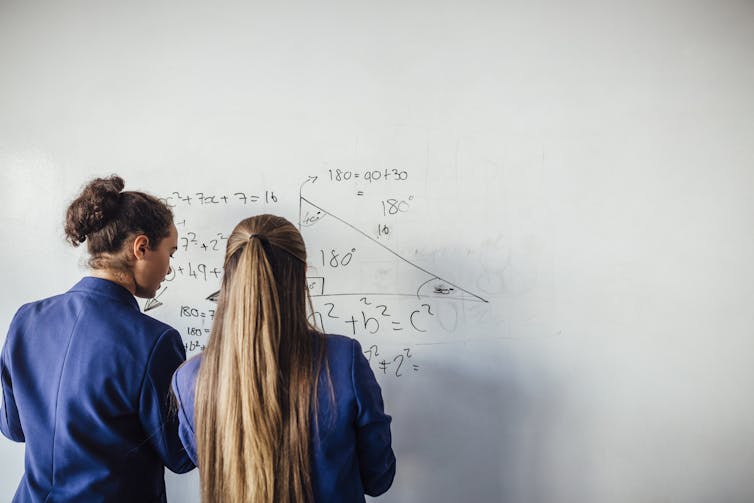
Two students work on maths problems at a whiteboard.


It is very common in Australian schools to “stream” students for subjects such as English, science and maths. This means students are grouped into different classes based on their previous academic attainment, or in some cases, just a perception of their level of ability.

Students can also be streamed as early as primary school. Yet there are no national or state policies on this. This means school principals are free to decide what will happen in their schools.

Why are students streamed in Australians schools? And is this a good idea? Our research on streaming maths classes shows we need to think much more carefully about this very common practice.

Why do schools stream?

At a maths teacher conference in Sydney in late 2023, I did a live survey about school approaches to streaming.

This survey was done via interactive software while I was giving a presentation. There were 338 responses from head teachers in maths in either high schools or schools that go all the way from Kindergarten to Year 12. Most of the teachers were from public schools.

In a sign of how widespread streaming is, 95% of head teachers said they streamed maths classes in their schools.

Respondents said one of the main reasons is to help high-achieving students and make sure they are appropriately challenged. 

But almost half the respondents said they believed all students were benefiting from this system.

We also heard how streaming is seen as a way to cope with the teacher shortage and specific lack of qualified maths teachers. These qualifications include skills in both maths and maths teaching.

More than half (65%) of respondents said streaming can “aid differentiation [and] support targeted student learning interventions”. In other words, streaming is a way to cope with different levels of ability in the classrooms and make the job of teaching a class more straightforward. 

The ‘glass ceiling effect’

But while many schools and teachers assume streaming is good for students, this is not what the research says.

Our 2020 study, on streaming was based on interviews with 85 students and 22 teachers from 11 government schools.

This found streaming creates a “glass ceiling effect” – in other words, students cannot progress out of the stream they are initially assigned to without significant remedial work to catch them up.

As one teacher told us, students in lower-ability classes were then placed at a “massive disadvantage”. This is because they can miss out on segments of the curriculum because the class may progress more slowly or is deliberately not taught certain sections deemed too complex.

Often students in our study were unaware of this missed content until Year 10 and thinking about their options for the final years of school and beyond. They may not be able to do higher-level maths in Year 11 and 12 because they are too far behind. As one teacher explained:

This comes as fewer students are completing advanced (calculus-based) maths.

If students do not study senior maths, they do not have the background for studying for engineering and other STEM careers, which we know are in very high demand.

On top of this, students may also be stigmatised as “low ability” in maths. While classes are not labelled as such, students are well aware of who is in the top classes and who is not. This can have an impact on students’ confidence about maths.

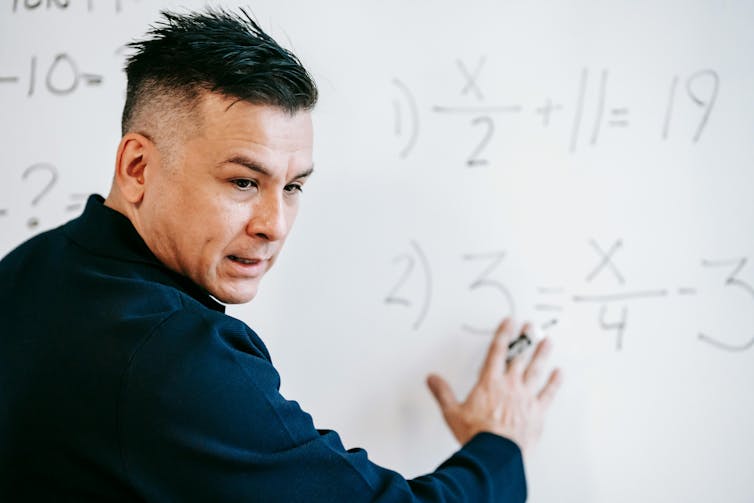
A man points to equations on a whiteboard.


What does other research say?

International research has also found streaming students is inequitable.

As a 2018 UK study showed, students from disadvantaged backgrounds are more likely to be put in lower streamed classes.

A 2009 review of research studies found that not streaming students was better for low-ability student achievement and had no effect on average and high-ability student achievement.

What should we do instead?

Amid concerns about Australian students’ maths performance in national and international tests, schools need to stop assuming streaming is the best approach for students.

The research indicates it would be better if students were taught in mixed-ability classes – as long as teachers are supported and class sizes are small enough.

This means all students have the opportunity to be taught all of the curriculum, giving them the option of doing senior maths if they want to in Year 11 and Year 12.

It also means students are not stigmatised as “poor at maths” from a young age.

But to do so, teachers and schools must be given more teaching resources and support. And some of this support needs to begin in primary school, rather than waiting until high school to try and catch students up.

Students also need adequate career advice, so they are aware of how maths could help future careers and what they need to do to get there.


International Conference on Mathematics and Optimization Method. 24-25 April 2024 At Berlin, Germany

Click the link to visit our website : https://maths-conferences.sciencefather.com/
Click this to nominate you profile Award Nomination : https://x-i.me/XU6E

Also visit:
Twitter: https://twitter.com/AnisaAn63544725
Pinterest: https://in.pinterest.com/maxconference20022/
YouTube: https://www.youtube.com/channel/UCDtKGr1-PBYZJ0tu5-f496g
Instagram : https://www.instagram.com/maths98574/
Tumbler: https://www.tumblr.com/maths2588

#sciencefather #researchw #conferences #awards #Mathematics #MathChat #STEM #MathIsFun #MathematicsEducation #Mathematician #Algebra #Calculus #Geometry #Statistics #DataScience #ProblemSolving #MathematicalModel #NumberTheory #MathematicalThinking #MathematicsTeacher #MathematicsDay #MathArt #MathematicsResearch #AppliedMathematics #MathGeek #MathPuzzle #MathHumor #MathematicsForAll #MathematicsClub #MathematicalAnalysis #MathematicalLogic #MathematicsProblem #MathematicsInNatu #MathematicsTrivia
Tuesday, September 26, 2023

Math error: A new study overturns 100-year-old understanding of color perception


LOS ALAMOS, N.M., August 10, 2022—A new study corrects an important error in the 3D mathematical space developed by the Nobel Prize–winning physicist Erwin Schrödinger and others and used by scientists and industry for more than 100 years to describe how your eye distinguishes one color from another. The research has the potential to boost scientific data visualizations, improve TVs and recalibrate the textile and paint industries.

“The assumed shape of color space requires a paradigm shift,” said Roxana Bujack, a computer scientist with a background in mathematics who creates scientific visualizations at Los Alamos National Laboratory. Bujack is lead author of the paper by a Los Alamos team in the Proceedings of the National Academy of Sciences on the mathematics of color perception. "Our research shows that the current mathematical model of how the eye perceives color differences is incorrect. That model was suggested by Bernhard Riemann and developed by Hermann von Helmholtz and Erwin Schrödinger—all giants in mathematics and physics—and proving one of them wrong is pretty much the dream of a scientist.”

Modeling human color perception enables automation of image processing, computer graphics and visualization tasks.

“Our original idea was to develop algorithms to automatically improve color maps for data visualization, to make them easier to understand and interpret,” Bujack said. So the team was surprised when they discovered they were the first to determine that the longstanding application of Riemannian geometry, which allows generalizing straight lines to curved surfaces, didn’t work.

To create industry standards, a precise mathematical model of perceived color space is needed. First attempts used Euclidean spaces—the familiar geometry taught in many high schools; more advanced models used Riemannian geometry. The models plot red, green and blue in the 3D space. Those are the colors registered most strongly by light-detecting cones on our retinas, and—not surprisingly—the colors that blend to create all the images on your RGB computer screen.

In the study, which blends psychology, biology and mathematics, Bujack and her colleagues discovered that using Riemannian geometry overestimates the perception of large color differences. That’s because people perceive a big difference in color to be less than the sum you would get if you added up small differences in color that lie between two widely separated shades.

Riemannian geometry cannot account for this effect.

“We didn’t expect this, and we don’t know the exact geometry of this new color space yet,” Bujack said. “We might be able to think of it normally but with an added dampening or weighing function that pulls long distances in, making them shorter. But we can’t prove it yet.”

The Paper: The non-Riemannian nature of perceptual color space, in Proceedings of the National Academy of Sciences, by Roxana Bujack, Emily Teti, Jonah Miller, Elektra Caffrey, and Terece L. Turton. https://www.pnas.org/doi/10.1073/pnas.2119753119#sec-8

The Funding: Laboratory Directed Research and Development Program of Los Alamos National Laboratory.


8th Edition of International Conference on Mathematics and Optimization Method

Website Link:https://maths-conferences.sciencefather.com/

Award Nomination: https://x-i.me/XU6E

Instagram: https://www.instagram.com/maths98574/

Twitter: https://twitter.com/AnisaAn63544725

Pinterest: https://in.pinterest.com/maxconference20022/

#maths #numericals #algebra #analysis #analysis #mathmatics #numericals #number #complex #graphics


Maths problem: review finds shortage of teachers and researchers


There are significant challenges facing teaching and research in the mathematical sciences in Australia, according to a nation-wide review of the discipline.

The findings are part of a mid-term review of Australia’s 10-year plan for mathematical sciences published today, and overseen by the Australian Academy of Science’s National Committee for Mathematical Sciences (NCMS).

Issues raised included the continued long-term decline in the supply of qualified secondary mathematics teachers.

NCMS Chair and Academy Fellow Professor Alan Welsh said the impact of the COVID-19 pandemic on the university sector had also resulted in notable losses to the mathematical sciences research community.

“COVID-19 exacerbated gender imbalances in the mathematical sciences workforce,” Professor Welsh said.

“These impacts affect not just mathematical sciences research outputs but also the quality of mathematical and statistical education available at all levels in Australia.”

The mid-term review recommends:continuing to develop programs and addressing current issues in teaching to give all Australian school students access to outstanding mathematics teachers
urgently addressing the cuts to mathematical courses at universities, which have impacted the ability of university students in Australia to access a degree in which they can major in the mathematical sciences
emphasising the contributions of mathematical sciences in responding to national challenges and informing policy decisions.

National Committee member and Academy Fellow Professor Kerrie Mengersen said the opportunities provided by the mathematical sciences community can only be realised with appropriate recognition of its role in responding to developing areas of interest from the government and research sectors.

“This must be paired with infrastructure and resourcing to support excellent mathematical and statistical work for the research that underpins many solutions to contemporary challenges, and to ensure high-quality education to equip the next generation of Australians with the mathematical science knowledge needed for the future,” Professor Mengersen said.

8th Edition of International Conference on Mathematics and Optimization Method

Website Link:https://maths-conferences.sciencefather.com/

Award Nomination: https://x-i.me/XU6E

Instagram: https://www.instagram.com/maths98574/

Twitter: https://twitter.com/AnisaAn63544725

Pinterest: https://in.pinterest.com/maxconference20022/

#maths #numericals #algebra #analysis #analysis #mathmatics #numericals #number #complex #graphics

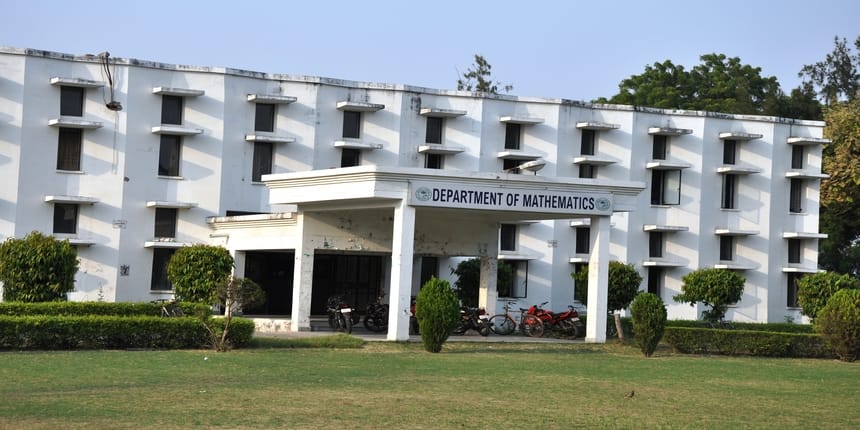
AMU’s mathematics department ranked 1st in India by US News, World Report


NEW DELHI: The Aligarh Muslim University’s Department of Mathematics, has become number one in India as per the Best Global Universities for Mathematics in India ranking published by the latest US News and World Report 2023. The university secured the 137th position from the 175th in 2022.

ISI, Kolkata with a ranking of 342 secured the third position. IIT Kanpur with a rank of world 352 secured fourth position while IIT Madras and IISC Bangalore are at fifth and sixth positions with a ranking of 372 and 384 respectively. There are only six institutions in India on the list.

ALSO READ| DU, AMU, Visva Bharti University among 105 universities introducing FYUP from new session: UGC

Mohammad Ashraf, chairman of the department said the department's progress is evident from an overall subject score of 56.8, positioning it at the topmost on the national level followed by TIFR, whose ranking is 324 worldwide.

Ashraf said, “Our achievement in this important global ranking is a testimony to the several years of dedicated efforts from our faculty and research scholars to enhance the ranking of the department. It is an accomplishment that could truly change the trajectory of the Department’s future”.

“The department’s recognition also highlights the calibre of mathematics education and it is a testament to the impact of our teaching and research in India on the global stage”, he added. The US News Education monitors higher education data for the world's research-led institutions.

ALSO READ| CUET UG Result 2023: AMU offers admissions to 15 programmes; seats, fee, eligibility criteria

“ The subject rankings, according to the US News, are powered by Clarivate Analytics, which provided the data and metrics used in the rankings, and the bibliometric data are based on the Web of Science. The bibliometric indicators used in this US News ranking analysis have been drawn over the last five-year period from 2018-22. However, the citations to these papers came from all publications up to the most recent data available. The indicators include publications, total citations, books, conferences, number of publications that are among the 10 percent most cited, number of highly cited papers that are among the top 1 percent most cited in their respective fields, international collaborations, etc” an official statement from the university read.


8th Edition of International Conference on Mathematics and Optimization Method

Website Link:https://maths-conferences.sciencefather.com/

Award Nomination: https://x-i.me/XU6E

Instagram: https://www.instagram.com/maths98574/

Twitter: https://twitter.com/AnisaAn63544725

Pinterest: https://in.pinterest.com/maxconference20022/

#maths #numericals #algebra #analysis #analysis #mathmatics #numericals #number #complex #graphics


Monday, September 4, 2023

Doctors with Math background have the upper hand in interdisciplinary research


Mumbai girl Aakriti Goel and Janhavi Ajit Rao from Bengaluru have something in common. Both women chose to become a doctor after investing years studying Engineering.
Aakriti who completed her BTech from BITS Pilani in 2015 and worked for several projects and startups, is now set to start her second innings as an MBBS student. Aakriti secured 1118 All-India rank in NEET 2021. Janhavi, an IT professional based in the US, chose to become a doctor after she was diagnosed with rheumatoid arthritis and realised that there is a lack of specialists to treat the disease. She was also touched by the service rendered by the doctors to the society. Janhavi completed her MBBS from MS Ramaiah Medical College, Bengaluru, in 2020. Currently, she is an internal medicine resident at Riverside University Health System, USA.

Dr Ajay Kumar Pal, associate professor, Department of Surgery, King George’s Medical University (KGMU), Lucknow, says that such kind of career switch is there but it is quite rare. “There are many students like me who qualify for both medical and Engineering entrance, but pick one,” says Dr Pal, who qualified for Medicine and Engineering in 2003.
However, Dr Pal, an MBBS graduate from Jawaharlal Nehru Medical College, AMU, believes that students with a Mathematics background have slightly better analytical skills as compared to those from pure Biological Science background.

There is no difference in skills as a doctor between Mathematics and non-Mathematics students. “Doctors who have studied Mathematics in class XII enjoy an upper hand in interdisciplinary research in areas such as Biomedical, Biotechnology and Biostatistics among others,” explains Dr Pal.
Tech intervention Technology has become a deciding factor in all disciplines. “Medicine is in a nascent stage in India and technology intervention is evident for better development of the infrastructure,” says Aakriti who wants to become a surgeon after completing her MBBS. “Candidates who come from Mathematics, Engineering or Technology background are better skilled with analytical and problem-solving and critical thinking abilities. Having an increased presence of these students in Medicine will definitely improve the efficiency and promote interdisciplinary research in this field,” says Aakriti.

8th Edition of International Conference on Mathematics and Optimization Method

Website Link:https://maths-conferences.sciencefather.com/

Award Nomination: https://x-i.me/XU6E

Instagram: https://www.instagram.com/maths98574/

Twitter: https://twitter.com/AnisaAn63544725

Pinterest: https://in.pinterest.com/maxconference20022/

#maths #numericals #algebra #analysis #analysis #mathmatics #numericals #number #complex #graphics

Thursday, August 24, 2023

Discussions about the application of artificial intelligence in solving complex mathematical problems.


Absolutely, the topic of AI in Mathematics is quite intriguing and has been gaining attention due to its potential to revolutionize problem-solving and mathematical research. Here's some more information about this topic:

AI in Mathematics involves the use of artificial intelligence techniques, such as machine learning, deep learning, and automated reasoning, to tackle complex mathematical problems that might be computationally intensive, time-consuming, or even beyond human capabilities. This intersection has the potential to accelerate mathematical research, automate tedious calculations, and even discover new mathematical insights.

Here are some aspects that might be discussed under the hashtag #AIinMathematics:

Automated Theorem Proving: AI systems can be used to automatically prove mathematical theorems. These systems use logical reasoning and computational techniques to determine the validity of mathematical statements.

Symbolic Mathematics: AI can help manipulate and simplify complex symbolic expressions, making it easier to handle intricate equations and formulas.

Optimization Problems: AI techniques can be employed to solve optimization problems, which are prevalent in various fields, including engineering, economics, and science.

Data-Driven Insights: AI can analyze large datasets to identify patterns, trends, and relationships that might not be easily apparent through traditional mathematical approaches.

Exploring New Mathematical Concepts: AI algorithms can help explore mathematical spaces that are challenging for humans to navigate, potentially leading to the discovery of new conjectures and theorems.

Mathematical Modeling: AI can aid in creating more accurate and complex mathematical models for real-world phenomena, improving predictions and simulations.

Algorithm Design: AI can assist in designing algorithms for solving mathematical problems, optimizing their efficiency and accuracy.

Education and Learning: AI-powered educational platforms can provide personalized learning experiences, adapting to the individual's pace and level of understanding in mathematics.

Computer-Aided Mathematics: AI tools can assist mathematicians in performing calculations, verifying proofs, and exploring mathematical structures.

Collaboration and Communication: AI systems might facilitate collaboration among mathematicians by suggesting potential areas of research or connecting researchers with similar interests.

Remember, the field of AI in Mathematics is rapidly evolving, with new advancements and applications emerging regularly. Following this hashtag on social media platforms can help you stay updated on the latest breakthroughs, discussions, and insights in this exciting and interdisciplinary field.

7th Edition of International Conference on Mathematics and Optimization Method

Website Link:https://maths-conferences.sciencefather.com/

Award Nomination: https://x-i.me/XU6E

Instagram: https://www.instagram.com/maths98574/

Twitter: https://twitter.com/AnisaAn63544725

Pinterest: https://in.pinterest.com/maxconference20022/

#maths #numericals #algebra #analysis #analysis #mathmatics #numericals #number #complex #graphics


Complex Numbers and Basic Operations


Complex mathematics, often referred to as complex analysis, is a branch of mathematics that deals with complex numbers and their properties. Complex numbers are numbers that consist of both a real part and an imaginary part, and they are written in the form "a + bi," where "a" is the real part, "b" is the imaginary part, and "i" is the imaginary unit (defined as the square root of -1).

Complex analysis explores the properties and behaviors of functions that involve complex numbers. It encompasses a wide range of topics, including:

Complex Numbers: Understanding the properties of complex numbers, arithmetic operations (addition, subtraction, multiplication, division), and the representation of complex numbers in the complex plane.

Complex Functions: Studying functions of a complex variable, which map complex numbers to other complex numbers. Complex functions can be continuous, differentiable, and have properties like holomorphicity.

Complex Derivatives: Defining derivatives of complex functions and studying their properties, such as the Cauchy-Riemann equations that link the real and imaginary parts of the derivative.

Complex Integration: Investigating integration of complex functions along curves in the complex plane. Key concepts include contour integration and the Cauchy Integral Formula.

Residue Theory: Analyzing the behavior of functions using the residues of singularities (poles and essential singularities) in the complex plane. This is particularly useful in solving complex integrals.

Conformal Mapping: Exploring functions that preserve angles between curves, which have applications in fields such as fluid dynamics and electrostatics.

Complex Power Series: Representing functions as power series with complex coefficients, similar to Taylor series in real analysis.

Analytic Continuation: Extending the domain of a complex function to include points where it might not be initially defined, often leading to interesting and unexpected results.

Applications: Complex analysis has applications in various scientific and engineering fields, including physics, engineering, signal processing, fluid dynamics, and more.

Complex analysis is a fascinating and important area of mathematics that helps us understand and analyze functions that involve both real and imaginary components. It has profound applications in many scientific disciplines and is a fundamental part of advanced mathematics.

7th Edition of International Conference on Mathematics and Optimization Method

Website Link:https://maths-conferences.sciencefather.com/

Award Nomination: https://x-i.me/XU6E

Instagram: https://www.instagram.com/maths98574/

Twitter: https://twitter.com/AnisaAn63544725

Pinterest: https://in.pinterest.com/maxconference20022/

#maths #numericals #algebra #analysis #analysis #mathmatics #numericals #number #complex #graphics


Tuesday, August 22, 2023

Making sense of the world through Maths


If you mime a silent Edvard Munch scream every time you see a mathematical problem, perhaps it is time to take a closer look at how much of our life is actually governed by numbers and equations. “Maths has the potential to connect us to universal truths that we can each access directly with our bodies and minds,” says Vijay Ravikumar, a mathematician with a penchant for puppetry and theatre arts.

Ravikumar recently premiered the “Geometry of Vision” series of online learning modules, which examines how we make visual sense of the world around us through Maths. The course has been developed with the support of the National Programme of Technology Enhanced Learning (NPTEL) and is available free online. In India, students can take it for credit at their home institution.
Maths to arts to maths again

Ravikumar’s own journey into interactive learning has an unusual background. Growing up in the U.S., he obtained a double major in Maths and English Literature from Amherst College, Massachusetts, before pursuing his Ph.D. in Maths at Rutgers University. He moved to India in 2013 for post-doctoral studies at the Tata Institute of Fundamental Research (TIFR) Mumbai, and then became an assistant professor at the Chennai Mathematical Institute.

By 2018, he left academia completely to become a theatre artist and puppeteer. However, Ravikumar shifted his focus back to Maths when the COVID-19 lockdown made online education de rigueur. “Geometry of Vision ”aims to demystify the way Maths works, especially in a non-academic setting. While we may not perceive ourselves as born number crunchers, our physical senses are constantly applying mathematical principles to process sensory data, says Ravikumar.

“Maths can be surprisingly intuitive at a visceral level, even if we’ve never thought about it consciously,” he says. His modules explain how the human mind is able to construct an intricate 3D understanding of our surroundings from 2D visual snapshots, by utilising various deep, elegant, and ancient mathematical principles. Beginning with an investigation of perspective drawing, and a survey of techniques artists have used for representing depth, the lessons move on to the “projective geometry” branch of Maths.
Open source learning

“My goal is to create a gateway to fundamental maths that is both accessible and exciting to interested learners from pretty much any background — whether they’re high-school or Ph.D. students, or adult learners looking for interesting activities after retirement,” says Ravikumar.

Keeping in mind that online instruction is a totally different medium from traditional in-person teaching, he has designed an interactive e-book format. “The course is not meant to be accessed through the usual NPTEL portal, but rather through an ‘Interactive Sandbox’ that I designed with Aatish Bhatia, a science writer at the New York Times. The student can scroll through a given lecture watching short, visually engaging videos interspersed with interactive questions, activities, and graphics. The ‘Interactive Sandbox’ is open source, and we plan to create a tutorial so interested teachers can easily adopt it,” he says.

Living and teaching in the U.S. and India has helped him appreciate the varied approaches towards education. “I hope this course can connect with a wide variety of learners, not only in terms of life experiences and mathematical backgrounds but also geographic locations. At the end of the day, one of the aspects I love most about Maths research is how it can bring together people of vastly different cultures, classes, and nationalities in a shared exploration,” he says.


7th Edition of International Conference on Mathematics and Optimization Method

Website Link:https://maths-conferences.sciencefather.com/

Award Nomination: https://x-i.me/XU6E

Instagram: https://www.instagram.com/maths98574/

Twitter: https://twitter.com/AnisaAn63544725

Pinterest: https://in.pinterest.com/maxconference20022/

#maths #numericals #algebra #analysis #analysis #mathmatics #numericals #number #complex #graphics

Monday, August 14, 2023

ChatGPT gets poorer in Maths, people say getting dumber with age is most humanlike thing it could do


A study conducted by Stanford University reveals that the popular AI chatbot ChatGPT created by OpenAI is experiencing fluctuations in performance, particularly in solving mathematical equations. The research highlights the phenomenon of "drift" in AI language models, emphasizing the importance of monitoring and addressing these changes to ensure consistent and reliable performance.


By India Today Tech: A study conducted by Stanford University found that the popular AI chatbot ChatGPT, created by OpenAI, is getting worse at solving mathematical equations. The chatbot experienced significant performance fluctuations on certain tasks between March and June. The research compared two versions of the technology– GPT-3.5 and GPT-4, focusing on tasks such as solving math problems, answering sensitive questions, generating software code, and visual reasoning.
As per the Fortune report, the study revealed a phenomenon called "drift," where the technology's ability to perform specific tasks changed unpredictably over time. In the case of GPT-4's math problem-solving capability, its accuracy dropped drastically from 97.6 per cent in March to a mere 2.4 per cent in June. As per the findings, the GPT-3.5 model demonstrated an opposite trajectory, improving from 7.4 per cent accuracy in March to 86.8 per cent in June on the same task.

7th Edition of International Conference on Mathematics and Optimization Method

Website Link:https://maths-conferences.sciencefather.com/

Award Nomination: https://x-i.me/XU6E

Instagram: https://www.instagram.com/maths98574/

Twitter: https://twitter.com/AnisaAn63544725

Pinterest: https://in.pinterest.com/maxconference20022/

#maths #numericals #algebra #analysis #analysis #mathmatics #numericals #number #complex #graphics

Thursday, August 10, 2023

Building India into a powerhouse in maths


Despite its rich legacy and size, India doesn’t fare well on global benchmarks of maths. Here’s a road map on how to do it

Mathematics is the foundation of modern science and technology, and its role in critical areas of national security such as cryptography is even more singular. However, despite a rich historical legacy (Aryabhatta, Brahmagupta and Bhaskara, for instance) as well as renowned mathematicians in the 20th century (such as S Ramanujan, SN Bose, PC reagents Mahanobis and CR Rao), India has fared less well in this critical field in recent years.

A recent study evaluated the contributions of top mathematicians based on the Discipline H-index or D-index, which tracks each scientist’s published scholarly papers and citations in their specific discipline.

Among the top 50 mathematicians, only one is of Indian origin; among the top 100, four are of Indian origin. Among the top 500, 15 are of Indian origin, but just one is based in India. Among the top 2,332 mathematicians, just 17 are based in India (less than 1%).

India ranks 19th, lower than tiny countries such as Israel, Austria and Belgium. While there have been two Indian-origin winners of the Fields medal (the Nobel Prize of mathematics) – Akshay Venkatesh and Manjul Bhargava – their parents had emigrated to Australia and Canada, respectively. And while institutions such as the Chennai Institute of Mathematics, Indian Institute of Science, Indian Statistical Institute and Tata Institute of Fundamental Research, have excellent mathematicians, the pool is thin.

Given India’s size, this is deeply dismaying. There are two reasons why India should be doing much better in mathematics. First, among all Science, Technology, Engineering and Mathematics (STEM) fields, the last one is the least capital-intensive. There is relatively less need for capital investments in labs and equipment, which need to be constantly upgraded. Mathematics also does not require large running costs of elaborate support infrastructure such as lab technicians or costly reagents.

Furthermore, if STEM is a ladder of social mobility, mathematics is even more so. Merit is rarely unambiguous, since the nature of standards and the referees that enforce them markedly shape its perception. But some fields of human endeavour have more unambiguous markers of merit.

In mathematics (along with sports, chess, and music), quality cannot be easily gamed. The language of maths is universal — and the standards of merit are unambiguous. The great Indian mathematician, Ramanujan, became a byword in number theory and pure mathematics despite his poverty, weak English language abilities, and being a fish out of water amidst the dons of Cambridge University.

India has failed to produce another Ramanujan despite the language of mathematics being universal (and, hence, English language proficiency mattering much less), a population that has grown five-fold, and is much more educated (at least as measured by the percentage of population finishing high school). This speaks volumes about India’s education system. Indeed, the current system of education is expressly designed to polish the stones and dim the diamonds.

Brilliant mathematicians are well likely to perform weakly or even fail in some subjects that don’t interest them. But India’s education prefers well-rounded mediocrity to narrow brilliance.

One of India’s biggest security challenges going forward will be cybersecurity and at the heart of it will be cryptography, for which the country needs hundreds of young talents in pure mathematics. Currently, key national security agencies such as the National Technical Research Organisation (NTRO) face serious human capital challenges (the largest employer of mathematicians in the US is the National Security Agency or NSA).

But the security challenge for India is much greater. Like all armies, the Indian armed forces are well prepared for the last war. This may matter less under conditions of slow technological change. But when technological change is rapid – and even more when it occurs at the breakneck speed as is the case today – the structures and personnel need a serious rethink.

To take an example, the US set up a new Army Futures Command (AFC) in 2018 (with about 20,000 personnel) to develop the technologies and concepts that will enable its armed forces to stay abreast of the sheer range and speed of unprecedented disruptive technologies that are impacting warfare. AFC is charged with leveraging developments in areas such as robotics, quantum computing, hypersonics, directed energy and Artificial Intelligence pioneered by the private sector. The key personnel are PhDs, who work, unlike the army’s usual hierarchical ethos. Knowledge and expertise, not rank and polish, matter. Breaking from the insularity that characterises militaries, it deliberately listens to a range of external civilian advisers, regularly convening meetings with technology experts.


7th Edition of International Conference on Mathematics and Optimization Method

Website Link:https://maths-conferences.sciencefather.com/

Award Nomination: https://x-i.me/XU6E

Instagram: https://www.instagram.com/maths98574/

Twitter: https://twitter.com/AnisaAn63544725

Pinterest: https://in.pinterest.com/maxconference20022/

#maths #numericals #algebra #analysis #analysis #mathmatics #numericals #number #complex #graphics


Intervention based on science of reading and math boosts comprehension and word problem-solving skills New research from the University of ...